



What is Reflexology?
Eunice D. Ingham, the developer of the science of Reflexology, brought this almost lost art to the United States in the 1930's. Along with her nephew Dwight C. Byers, President of the International Institute of Reflexology, have developed the ORIGINAL INGHAM METHOD.
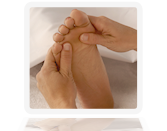
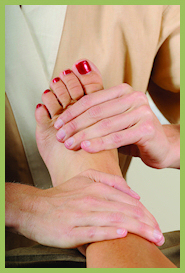
Reflexology is a unique method of using the thumb and fingers to stimulate more than 7,200 nerve endings in each foot. These nerve endings correspond to all parts of the body, including organs and glands. Some reflexologists also work with the hands and the ears.
According to The Original Works Of Eunice D. Ingham," Stories The Feet Can Tell Thru Reflexology"," Reflexology is a science which deals with the princple that there are reflexes in the feet relative to each and every organ and all parts of the body.Stimulating these reflexes properly can help many health problems in a natural way, just like preventitive maintenance."
Stimulating the appropriate region is intended to eliminate energy blockages thought to produce discomfort or disease in the related areas.
Reflexology is used to prevent, rather that cure, and is used to relieve a wide variety of ailments.
Origins of Reflexology
Dr. William Fitzgerald, in his book Zone Therapy, states that, "a form of treatment by means of pressure points was known in India and China 5,000 years ago." Eunice Ingum is known to have brought reflexology to the U.S. in the last century. This knowledge, however, appears to be almost lost or forgotten. Perhaps it was set aside in favor of acupuncture, which emerged as the stronger growth from the same root." There also appears to be evidence of reflexology being used in Egyptian art around 2330 B.C. E.
What Does Reflexology Do?
Reflexology can relieve stress and tension within the body. It improves circulation and lymphatic flow, and works to unlock nerve impulse pathways. These benefits all work toward helping the body to replenish itself by restoring balance to the vital energies.
According to Shelly Hess, author of The Professional’s Reflexology Handbook, “Reflexology works to discover how the soft tissue organs and the entire skeletal system are functioning. Through trained fingers, the reflexologists can detect early warning signs that the body is struggling and can then help restore the internal system to better balance.”
In reflexology, there are three areas – both in the evaluation and the session – that your reflexologist will concentrate on: feet, hands, and ears.
How Much Time Should I Allow?
You should allow 60 minutes for the reflexologist to work.($85.00) The client may have a session in a reclining chair or on a massage table.
What Are Some Specific Conditions Where Reflexology Might Be Helpful?
- Headaches, including migraines
- Arthritis
- High blood pressure
- Backache and sciatica
- Stress
- Allergies and sinus problems
- Carpal tunnel syndrome
- Constipation
- Insomnia
- Premenstrual syndrome
- Menstrual cramps
- Digestive disorders
- Hormone imbalances and circulatory problems
- Last 2 or 3 weeks of due date of prenancy, may help turn baby and prepare mother's pelvic bowl and lungs for birthing
- Postpartum depression
- Mood disorders
- Asthma
- Huntington's Disease
Each person responds differently but...
For most conditions, a course of sessions requires twice a week for 1 to 3 weeks. Giving the body 3 days to normalize between sessions is recommended. Some response should be seen after 3 sessions. Then a maintenance schedule can be assessed. Usually once a month at that point. Reflexology is safe for both sexes and all ages.
Who Can Benefit From Reflexology?
People of all ages can benefit from reflexology sessions. We all suffer from stress at one time or another, and aches and discomfort are a part of daily life. Reflexology has a long history of promoting relaxation and easing of discomfort.
How Frequently Should I Have a Reflexology Sessions?
Once a week is normal; an extreme case would be twice a week. The body needs time to normalize between sessions.
Reflexology also works wonderfully in conjunction with other body therapies. Again, you should wait about 3 days between therapies to avoid overloading the body.
Can I Do This At Home?
Certain areas of the hands can be worked on, but it is rather awkward to work on your own feet. For best results, it is nessary for the legs to be stretched out and not a bend in the knee to get full nerve flow. Some areas are hard to reach and it’s difficult to relax. Still, your therapist can share some self-help reflexology points with you.
Will My Feet Be Washed?
If you have come directly from a day at work or have a problem with foot odor, the practitioner may wash your feet before the beginning of the session.
But I’m Ticklish!
The practitioner will adjust her touch to what is comfortable for you. Sometimes a little more pressure alleviates the “ticklish” feeling. Relaxation helps, too, and the practitioner will have several techniques for relaxation at her disposal.
The above is copyrighted by Associated Bodywork & Massage Professionals 2005